Expanding Infrastructure and Public Services, and Implementing Hundreds of Projects; Key Achievements of the Development and Reconstruction Week in 1447 AH
2026-09-07
Expanding Infrastructure and Public Services, and Implementing Hundreds of Projects; Key Achievements of the Development and Reconstruction Week in 1447 AH
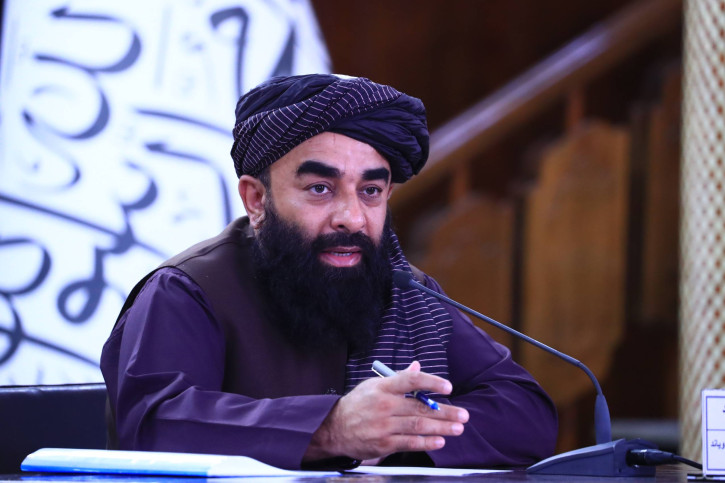
Within the framework of the “Government in the Mirror of the Press” program and on the occasion of the Development and Reconstruction Week, during a press conference at the Government Media and Information Center (GMIC), Mawlawi Zabihullah Mujahid the spokesperson of the Islamic Emirate of Afghanistan (IEA) announced the major achievements of the country’s infrastructure and development institutions in 1447 AH. According to the information, hundreds of projects have been implemented in road construction, water and energy, rural development, urban development and municipal services, providing citizens with better services and more employment opportunities.
According to the information, during 1447 AH, the Ministry of Public Works undertook 262 infrastructure and development projects, including the construction of roads, bridges, mosques and railway lines. Of these, 91 projects have been completed, while 171 projects are currently under various stages of implementation. Additionally, 393 kilometers of roads were asphalted, as well as feasibility studies for 932 kilometers of roads, 777 kilometers road survey and the design for 350 kilometers of roads were completed. Furthermore, work has begun on the second phase of the Khaf–Herat railway, covering 47.3 kilometers with a total value of over USD 54 million, as well as the second phase of the Aqina–Andkhoy railway, covering 10 kilometers and valued at over USD 12 million. Over 7602000 metric tons of goods were transported through the country’s ports and railway routes, representing a 77.9 percent increase compared with the previous year.
Based on the information, during 1447 AH, Kabul Municipality completed the asphalt paving, concrete paving, stone paving, expansion and construction of 121 kilometers of roads across various parts of Kabul City. In addition, more than 94000 square meters of roads were repaired and rehabilitated. The construction and repair of 7472 meters of canals were completed, while the construction of the underground market of Pul-e-Kheshti was completed and was opened for use with having 360 shops.
According to the information, during 1447 AH, the Ministry of Energy and Water completed two major dams in Kabul and Zabul provinces, as well as a water diversion tunnel project in Farah Province at a cost exceeding AFN 4336000000. In addition, 45 check dam projects with a total cost of over AFN 186 million have been completed and put into operation. To help prevent damage to agricultural land, 16 riverbank protection projects have also been completed.
Furthermore, an MoU was signed for the generation of 10000 megawatts of electricity from domestic energy resources and the project's preliminary work has already begun. Electricity supply projects were inaugurated in Qush Tepa and Darzab districts of Jawzjan province with the worth of AFN 1886000000, Pashtun Kot, Gurziwan and Bilchiragh districts of Faryab province with the worth of AFN 1120000000, and Gosfandi, Sozma Qala and Sangcharak districts of Sar-e-Pul province with the worth of AFN 880000000.
According to the information, during 1447 AH, the Ministry of Rural Rehabilitation and Development completed 290 water supply networks valued at over AFN 1216000000, providing safe drinking water to over 590000 people. In addition, 330 infrastructure projects with the worth over AFN 2891000000 were implemented. These projects included the construction of rural roads, bridges, culverts, irrigation canals and retaining walls.
Based on the information of the spokesperson of the IEA, the Ministry of Urban Development and Housing prepared and approved 94 urban plans, including master plans, strategic plans, detailed plans and plans for residential townships for migrants. In addition, 47089 residential plots were distributed to returnees in various provinces, while the implementation of 10 housing projects is ongoing. Over 100 building designs were prepared and approved for mosques, schools, hospitals, courts, universities, and commercial and residential buildings.
The Ministry of Borders and Tribal Affairs also approved 143 border development projects valued at AFN 1 billion in seven provinces located along the imaginary line. Of these, 44 projects have been completed.
According to the information, Da Afghanistan Breshna Sherkat provided electricity services to 70653 customers, completed 10 infrastructure projects and started work on 40 other projects. The National Development Corporation also completed the first phase of the Qosh Tepa Canal excavation, covering 108 kilometers along with several other infrastructure projects. In addition, the Afghanistan State Oil and Gas Corporation completed 36 infrastructure and development projects and continued work on 26 other projects. The Central Silo of Kabul also resumed operations after being inactive for nearly 35 years. With an investment of around AFN 21 million, its flour mill now has the capacity to produce 120 tons of flour every 24 hours.
Based on these achievements, the implementation of development projects in various sectors has created direct and indirect employment opportunities for thousands of people across the country. Efforts are also continuing to expand infrastructure, improve public services and support the reconstruction of the country.
The "Government in the Mirror of the Press" program was launched by the Government Media and Information Center (GMIC) to highlight the key achievements, activities and public services of government institutions.